
The NPI process — new product introduction — is where an electronics design stops being a set of files and becomes a product a factory can build repeatedly, at a known cost and a known quality level. Most published guides on new product introduction are written by software vendors. This one is written from the shop floor: it follows the five NPI phases Aurightec runs for every new project, what happens inside each one, how long each realistically takes, and what a customer has to provide to keep the schedule.
Paul Zhang, Director — Production, Engineering and Digitalization

The five phases of the NPI process
Aurightec structures new product introduction into five phases aligned with APQP (Advanced Product Quality Planning) principles. Three formal quality gates sit between them: a project cannot pass to the next phase until the gate criteria are met.
Phase 0 — Project acquisition and handover (~1 week)
Feasibility review, RFQ and quotation review, review of the customer’s input documentation, receipt of the customer purchase order, and the Quality Gate 0 review. This phase decides whether the project is manufacturable as specified — and surfaces the questions that are far cheaper to ask now than in Phase 3.
Phase 1 — Project planning (~1 week)
Project kick-off and confirmation of the production routing; creation of the product BOM and AVL; customer requirement review; definition of the NPI manufacturing process flow; identification of special processes and special characteristics; material purchasing and full-kit planning; and DFM analysis. The DFM review in this phase is where most avoidable cost is removed from a project.
Phase 2 — Process design and development (~2 weeks)
Material full-kit readiness, process development, equipment program and parameter development, production fixture and tooling development, and the documentation set that makes production repeatable: PFMEA, control plan, and standard work instructions (SWIs), plus system maintenance planning. The phase closes with an NPI build readiness review, a customer requirement review, and the Quality Gate 1 review.
Phase 3 — NPI build (~1–2 weeks)
The first real build. NPI production tracking, measurement system study, process data collection, product first article inspection (FAI), the NPI Q-run report, PPAP submission, customer validation and approval, and the Quality Gate 2 review. This is the phase that either confirms the previous four weeks of preparation or exposes what was missed.
Phase 4 — Ramp-up and mass production (~4–8 weeks)
Ramp-up planning, review of open action status, mass production readiness review, ramp-up tracking, quality and efficiency review, and continuous improvement. The range depends on the customer’s project status and validation planning.
How long does that add up to?
Taken together, the engineering and preparation work across these five phases runs roughly 9–14 weeks. One important qualification: this covers the NPI process itself. It does not include component lead times, which are added on top and can extend the overall project by several weeks depending on the BOM and the current market situation. Planning a launch date therefore means adding your longest component lead time to the NPI schedule, not reading 9–14 weeks as a start-to-finish figure.
Within the NPI process, the variable that moves the schedule most is not factory capacity. It is the quality of the information handed over at the start.

The three most common handover mistakes — and what they cost
Asked what most often increases production cost and extends lead time, the team named three customer-side issues:
- Incomplete or inconsistent documentation. It creates additional communication cycles and can cause product or process validation to fail — which extends the NPI lead time.
- Designs that do not conform to IPC standards, or that have poor manufacturability. The result is low production efficiency and higher unit cost, permanently, for as long as the product is built.
- Component selections that are not compatible with the intended manufacturing process. These show up as higher defect rates and rework cost.
All three are cheap to fix in Phase 0 or Phase 1 and expensive to fix after Phase 3.
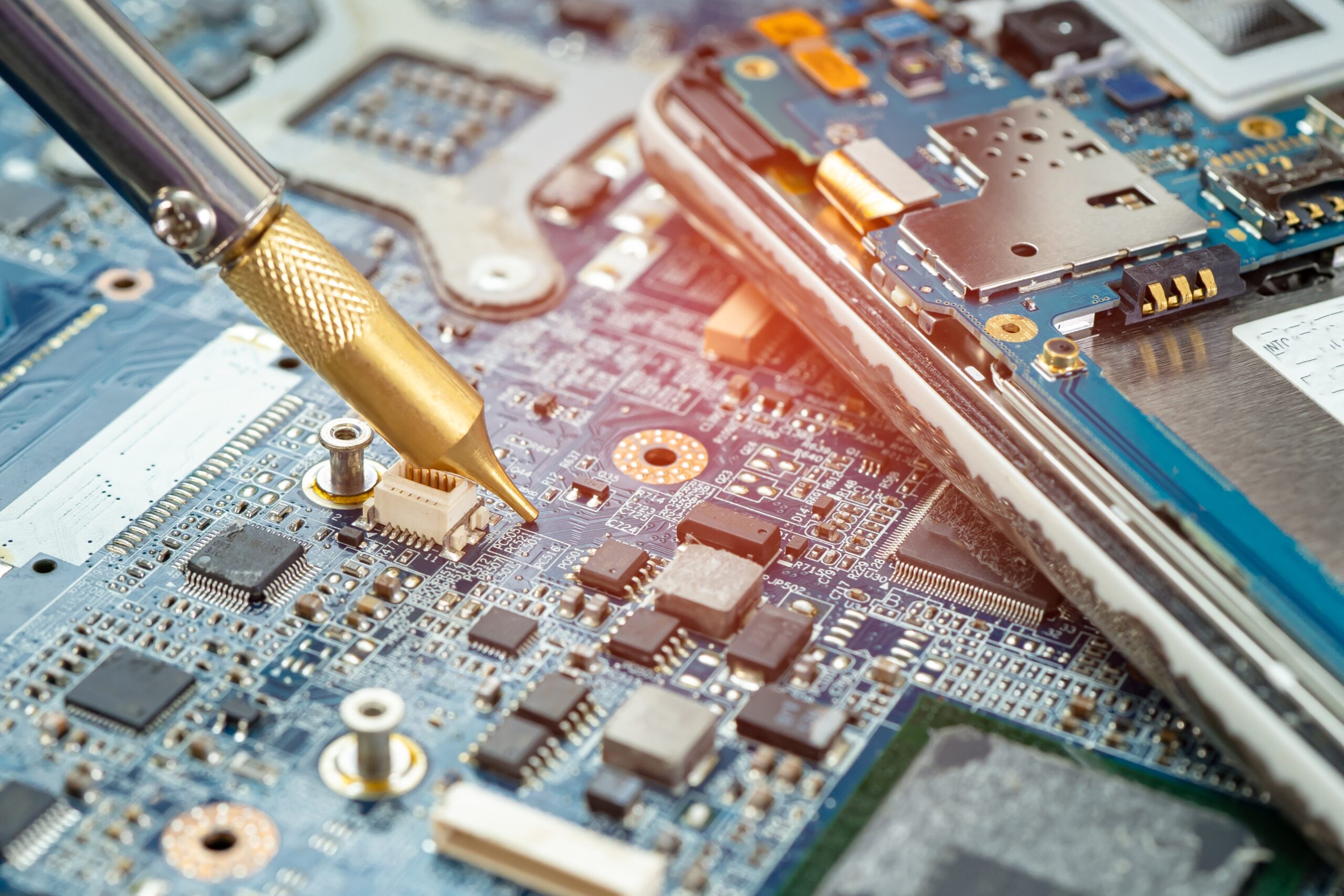
Case: how one DFM review removed 100% rework from a product
During an NPI build, excessive solder was found on the bottom side of a QFN component. DFM analysis identified the root cause as a via-in-pad design: solder was escaping through the vias under the component pad.
Had the PCB design not been corrected, every board would have required rework after the reflow soldering process — 100% rework, for the life of the product. Working with the customer, the design was optimized using solder-mask-plugged vias, and the rework requirement disappeared before mass production ever started.

NPI checklist: what the customer needs to provide
A smooth new product introduction depends on a complete handover package. The list below is what Aurightec asks for at project start:
- PCB design files — ODB++ preferred, plus Gerber files, XY (coordinate) data and the PCB fabrication drawing
- BOM and AVL
- Assembly drawings, mounting drawings and schematic drawings
- Drawings for customized components
- Test requirements and specifications
- DFMEA
- Quality targets and IPC workmanship standards (class level)
- Product application and production-related information
- Any special requirements
- Golden samples
- Historical lessons learned from similar products or previous builds
The last item is the one customers most often skip and most often regret: previous build history tells the NPI team where this product family has failed before.
DfX and Lean on the factory floor: two examples
DfX and Lean are easy to claim and harder to demonstrate. Two concrete examples from recent projects:
DFM: eliminating an entire process step
During the DFM review of a new project, pin headers and connectors were found placed less than 5 mm from the board edge. That spacing forced breakaway tabs into the PCB panel design and introduced an additional depaneling process — an extra operation on every panel, forever. The design was optimized with the customer based on the DFM findings, and the depaneling process was eliminated for this product.
Lean: +50% output from one production cell
For some automotive products, final inspection was originally performed after the router depanel process, as a separate step. Applying Lean principles, AOI was introduced for final quality control and the router depanel and FQC AOI operations were combined into a single production cell. Cell output efficiency improved by 50%.
Frequently Asked Questions
How long does the NPI process take in electronics manufacturing?
At Aurightec the NPI process itself — the engineering and preparation work — takes roughly 9–14 weeks: about one week for acquisition and handover, one week for planning, two weeks for process design and development, one to two weeks for the NPI build, and four to eight weeks for ramp-up, depending on the customer’s validation planning. This time frame excludes component lead times, which are added on top and depend on the BOM. Incomplete input data is the most common reason for exceeding it.
What is a quality gate in the NPI process?
A formal review that a project must pass before moving to the next phase. Aurightec runs three: Quality Gate 0 after project acquisition, Quality Gate 1 after process design and development, and Quality Gate 2 after the NPI build and customer validation.
What are FAI and PPAP in new product introduction?
First article inspection (FAI) verifies that the first manufactured units match the design and specification. PPAP (production part approval process) is the documented evidence package submitted for customer validation and approval. Both take place in the NPI build phase, before ramp-up begins.
What does a manufacturer need from the customer to start NPI?
PCB design files (ODB++ preferred, with Gerber, XY data and fabrication drawing), BOM and AVL, assembly, mounting and schematic drawings, customized component drawings, test requirements, DFMEA, quality targets and IPC workmanship class, product application details, special requirements, golden samples, and lessons learned from previous builds.
Planning a new product introduction? Our NPI team reviews your design before it becomes a production problem. Let’s talk